For most creators, the story goes something like this:
You post.
You grow.
You monetize … sometimes.
You refresh your analytics … constantly!
And somewhere between chasing the algorithm and negotiating your next brand deal, something uncomfortable creeps in:
“Why does this feel like a lot of work for something I don’t actually own?”
That feeling isn’t imposter syndrome. It’s structural.
Because despite what platforms imply, you’re not just a content creator. You’re an intellectual property company working inside systems that were never designed to let you build durable assets.
Platforms Don’t Pay for Ownership—They Pay for Attention
TikTok, Instagram, YouTube, Substack, Patreon, they all promise the same thing in different packaging:
“Build an audience here, and we’ll help you make money.”
What they don’t say is the quiet part:
“As long as your value remains temporary, fragmented, and dependent on us.”
Platforms are designed for attention extraction, not creator wealth creation. They reward velocity, frequency, and engagement and not ownership, structure, or long-term value.
That’s why:
- A viral video can pay once and disappear
- A year of expertise can be worth less than a single brand deal
- Income rises and falls with algorithms you don’t control
If creators truly owned what they were building, platforms would lose leverage. So instead, content flows, but assets never form.
Content Is Output. IP Is the Asset.
Creators are told to “post more,” “test formats,” and “stay consistent.” Rarely are they told to step back and ask:
- What am I actually building?
- Can this be reused, licensed, or scaled?
- Would this still be valuable if the platform disappeared tomorrow?
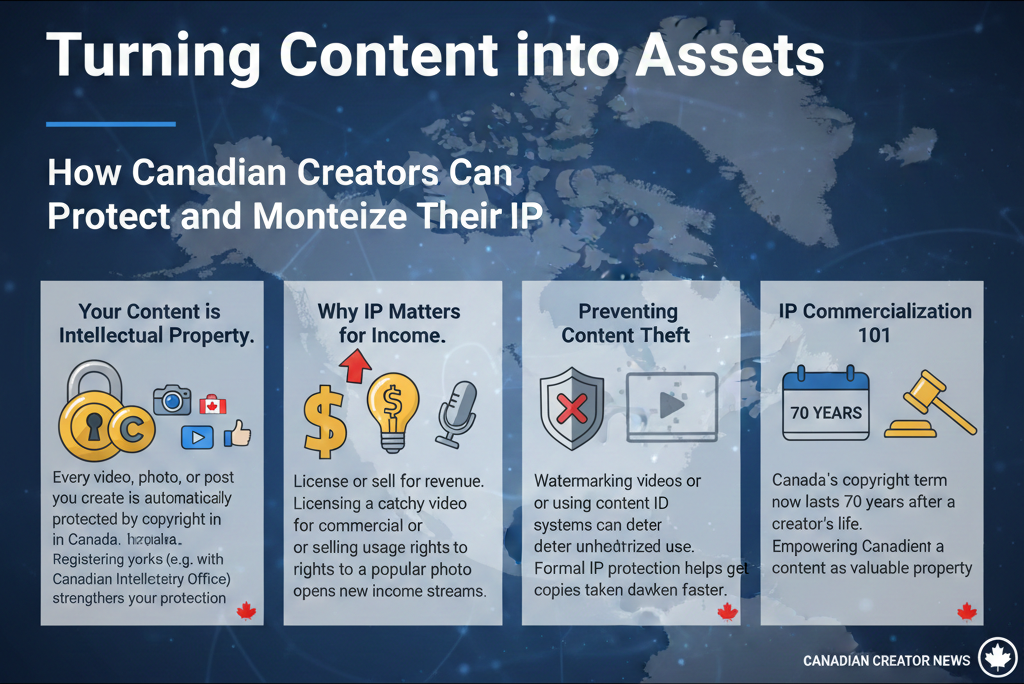
Intellectual property isn’t a logo or a trademark. It’s the structured, defensible expression of your knowledge, creativity, and trust. Your IP includes:
- Frameworks, methods, and repeatable ideas
- Educational content and proprietary insights
- Series, formats, and recognizable narratives
- Audience trust tied to your expertise
- Data, performance history, and proof of outcomes
The problem isn’t that creators lack IP. The problem is that platforms treat it like disposable content.
Why Most Creators Feel “Stuck” (Even When They’re Successful)
Many creators are doing everything “right” and still feel trapped. That’s because most monetization paths are:
- Fragmented (ads here, sponsors there, a course over there)
- Unpredictable (dependent on reach, not rights)
- Non-compounding (you start over every month)
Even high-earning creators often discover:
- Their income doesn’t scale cleanly
- Brands control the terms
- There’s no standardized way to package or license what they’ve built
In other words, they’re running a business, but without the infrastructure businesses rely on.
Institutions Don’t Buy Content. They Buy IP.
Brands, publishers, educators, and enterprises don’t shy away from creators because they lack talent. They hesitate because:
- Rights are unclear
- Usage terms are inconsistent
- Reporting and controls are ad hoc
- IP ownership is often murky
So, creators are forced into:
- One-off deals
- Buyouts that strip long-term value
- Custom agreements that favor the buyer
The result? Creators generate enormous value but capture very little of it.
The Reframe: You’re Already an IP Company
Here’s the mental shift that changes everything:
You don’t monetize content.
You commercialize IP.
Once creators see themselves as IP companies, the questions change:
- How do I package my work into durable assets?
- How do I protect ownership and control usage?
- How do I create repeatable, predictable revenue?
- How do I make my IP legible to serious buyers?
This isn’t about posting less. It’s about extracting more lifetime value from what you already create.
Where CreatorBridge Global Comes In
CreatorBridge Global exists because creators shouldn’t have to become lawyers, rights managers, or enterprise negotiators just to own their work. We built an institutional-grade IP commercialization platform that does what platforms won’t:
- Treat creator output as assets, not feed material
- Standardize rights, licensing, and packaging
- Make creator IP discoverable, protected, and transaction-ready
- Enable repeatable revenue through subscriptions, licensing, products, and partnerships
CreatorBridge helps creators move from:
- Algorithm dependence → asset ownership
- Fragmented income → structured revenue operations
- One-off deals → scalable IP-backed ventures
We don’t optimize for clicks or session time. We optimize for creator lifetime economic value.
The Creator Economy Doesn’t Need More Creators, It Needs More Owner-Operators
The future of the creator economy isn’t louder, faster, or more viral. It’s more:
- Structured
- Defensible
- Trusted
- Scalable
Creators who recognize they are IP companies will outlast platforms, algorithms, and trends. Those who don’t will keep renting their livelihoods, one post at a time. The good news here is that if you’re already creating, you already own the raw materials. The next step is turning them into something that lasts.