A Growing Industry, Across Borders
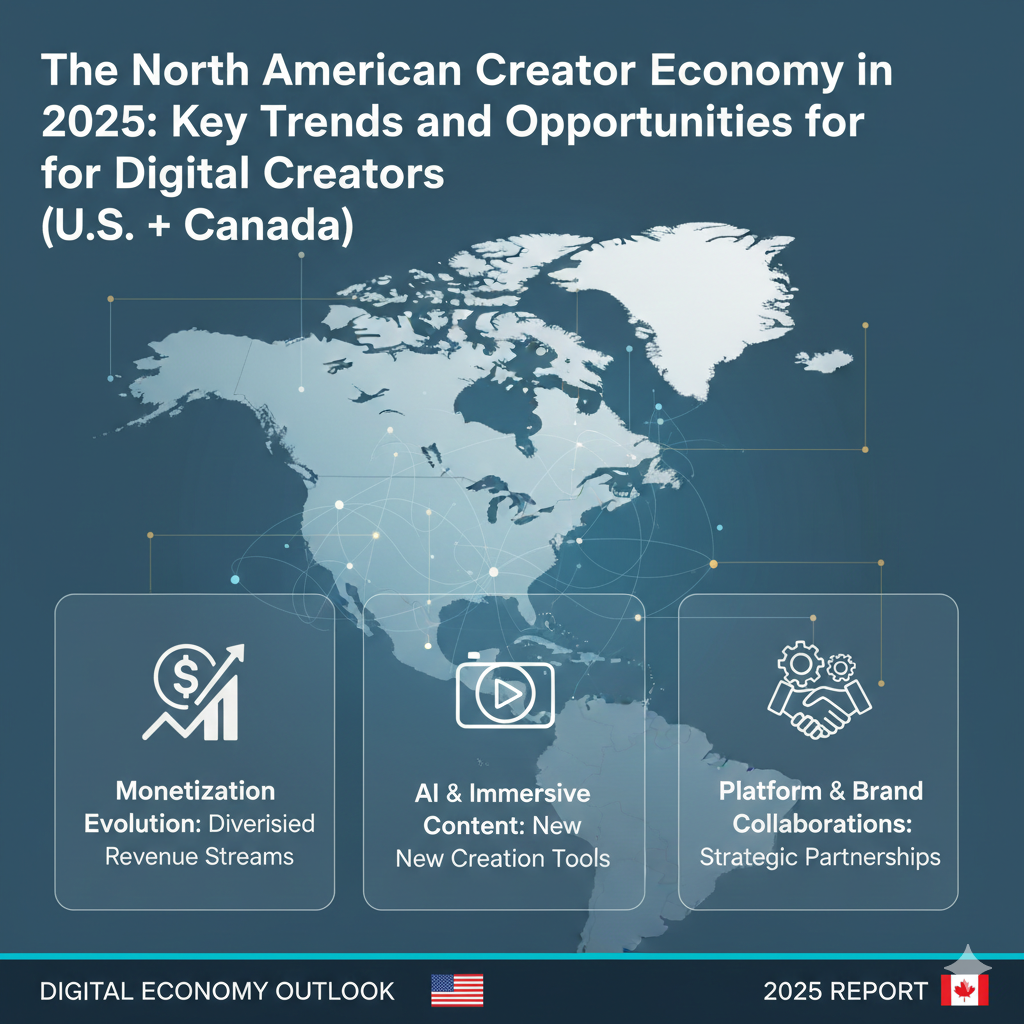
What began as a niche, hobby-driven space has matured into a full-scale North American industry. In both the United States and Canada, digital creators now power a meaningful share of modern marketing, media consumption, and e-commerce influence. Brands are investing more consistently in creator partnerships, not just as “campaign add-ons,” but as core distribution and trust channels. The opportunity to earn a real living as a creator has never been bigger — and competition has never been sharper. This article will frame the creator economy as a cross-border market where Canadian creators increasingly scale into U.S. audiences and U.S.-based brands look north for trusted, high-performing niche creators.
U.S. and Canadian Audiences Embrace Creator Content
Across North America, audiences are shifting from traditional media to creator-led content across YouTube, TikTok, podcasts, newsletters, and short-form video ecosystems. The U.S. market continues to set platform trends, while Canada often mirrors those behaviors with its own distinct dynamics (including bilingual communities and strong regional creator ecosystems). We’ll explore what people are watching, how they’re discovering creators, and why “creator trust” is now a measurable advantage in both countries. From education content and product reviews to entertainment and niche expertise, the creator economy has become a default way people learn, shop, and form opinions — which expands opportunity for creators who build authority, consistency, and recognizable formats.
Support, Recognition, and Professionalization
The creator career path is gaining mainstream legitimacy across North America. In Canada, we’ve seen increasing institutional support and creator-focused initiatives, while in the U.S. the ecosystem is more commercially mature with a larger brand and agency infrastructure. In both markets, creators are being treated less like “individual influencers” and more like scalable partners — but this comes with higher expectations. Brands now look for professional workflows, reliable delivery, clear usage rights, and compliant disclosure practices. This section will highlight how creators can meet rising standards without losing authenticity, and why operational maturity (contracts, rights management, repeatable packaging) is becoming a competitive moat.
Monetization and IP Trends: From Content Output to Owned Assets
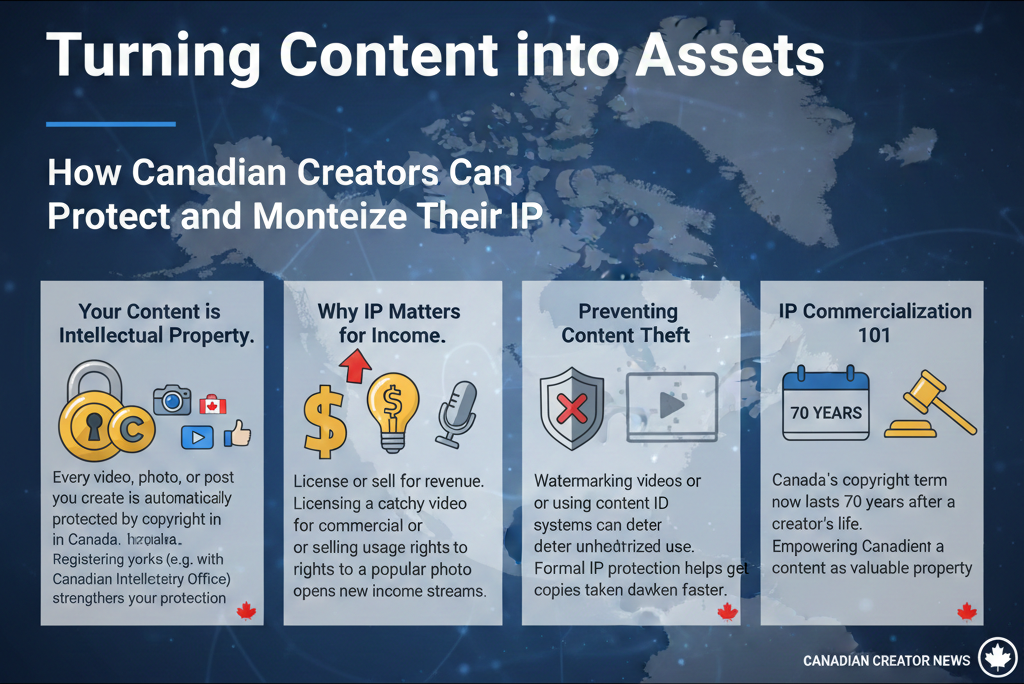
North American creators are diversifying beyond platform payouts and one-off sponsorships into subscriptions, digital products, affiliate income, brand retainers, and — increasingly — IP licensing. The biggest shift is strategic: creators are learning to treat their work as intellectual property, not disposable posts. That means packaging content into reusable assets with defined rights, pricing, and terms that allow brands to license content for ads, websites, internal training, product pages, and more. We’ll address why rights clarity and IP protection matter more than ever, how creators can monetize the same work multiple times, and why the market still lacks a single dominant standard for creator IP packaging — leaving room for platforms and systems that make creator IP enterprise-ready.
Looking Ahead – Opportunities in the U.S. and Canada
The next phase of the creator economy is cross-border by default. Canadian creators can scale into the U.S. more easily than ever, while U.S. brands increasingly seek credible creators who can reach Canadian audiences authentically — especially as social commerce grows and creator content becomes a key conversion driver. We’ll close with predictions around platform volatility, regulatory attention, the rise of licensing and asset-based monetization, and the long-term advantage of building a creator business that isn’t fully dependent on algorithms. The core takeaway: creators who build owned assets, standardized offers, and repeatable revenue models will win across both markets — regardless of platform shifts.